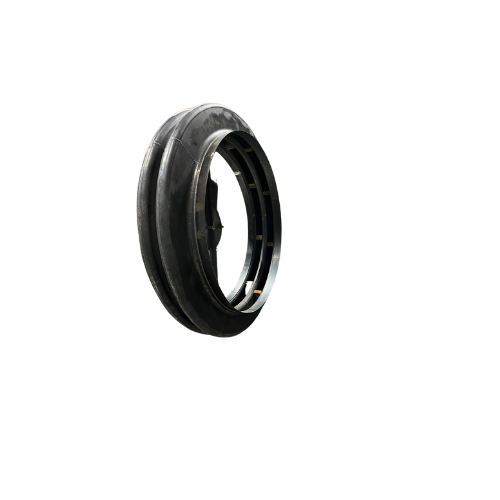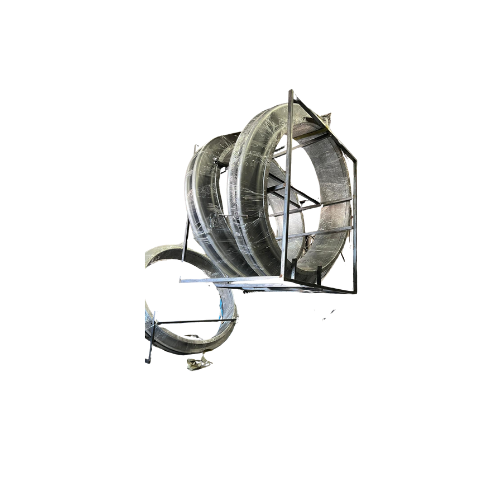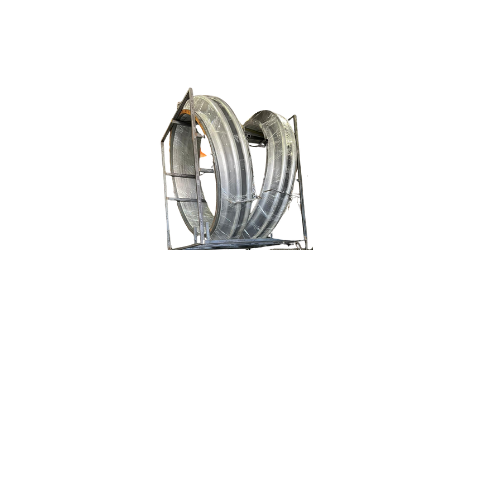
Lens Expansion Joint
A single thin-walled, lens-shaped flexing element welded into the line to absorb axial movement on large-bore, high-temperature runs such as flue-gas ducting, power-plant piping and process lines carrying abrasive media and solids.
Technical Data
| Bellow Material | Carbon Steel St37.2 standard (opt. Stainless Steel AISI 304 / 316 / 321) |
|---|---|
| Connection Type | Weld-Neck, Flanged, or without additional connection parts |
| Media | Fluids, gases, abrasive media and solids |
| Nominal Sizes | DN25 to DN3000 |
| Max. Temperature | 550 °C |
| Max. Pressure | PN40 |
Selection Guide
Butt-welded into the line — the standard lens build.
Best forDucts · penstocksWith bolting flanges where sections must unbolt.
Best forDemountable runsLenses in series multiply the axial travel.
Best forLonger travelsDatasheet & Drawings
Lens joint specifications and pressing details on one page, plus the technical drawing. A certified approval drawing follows with your quotation.
EN 10204 3.1 material certificates are supplied with your shipment.
Frequently Asked Questions
What is a lens expansion joint?
A lens expansion joint (lens-type compensator) is a single flexible "lens" formed by welding two pressed steel half-shells at their outer edge. It absorbs axial thermal movement in large-diameter, low- to medium-pressure piping, and several lenses can be combined for greater travel.
How is a lens joint different from a bellows expansion joint?
A lens element is fabricated from heavier plate rather than thin multi-ply foil, so it is more robust and reaches far larger diameters, though at lower pressure. Bellows joints suit higher pressures and smaller bores; lens joints excel on large ducts and mains.
How much movement can a lens expansion joint absorb?
A single lens provides a defined axial stroke; welding several lenses in series (a multi-lens compensator) increases the total axial movement proportionally. TOTFLEX sets the number of lenses to your required travel and cycle life.
What sizes, pressures and temperatures are available?
Lens joints are engineered across a DN25–DN3000 envelope, up to PN40 and 550 °C, with large-bore units rated at correspondingly lower pressures — each unit verified for its specific duty.
Where are lens expansion joints used?
They are common on district-heating mains, power-plant flue-gas ducts, boiler-house piping, chimney and stack connections, and large hot-water and steam lines.
Does TOTFLEX supply drawings and certificates and ship worldwide?
Yes — approval drawings are issued before manufacture, and units ship with EN 10204 3.1 material certificates, hydrostatic-test and NDT reports and PED/SEP declarations where applicable, exported worldwide.
Engineered to order. Delivered worldwide.
Send your duty conditions — size, pressure, temperature, medium and connections — and our engineers return a drawing, material selection and lead time.
Request a quote