Externally Pressurized Expansion Joints
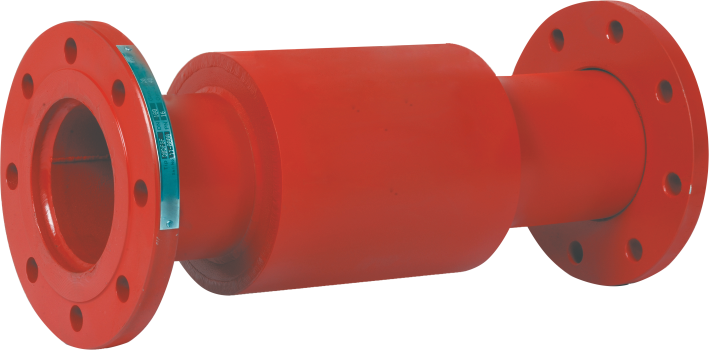
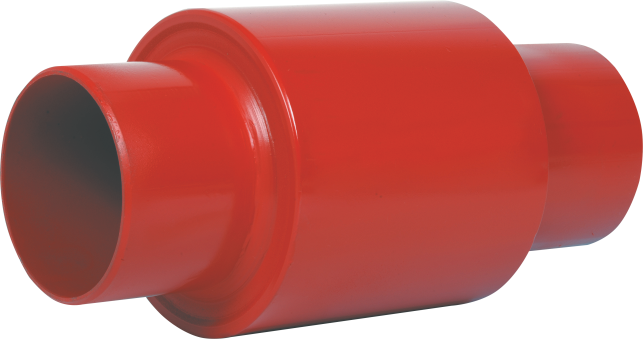
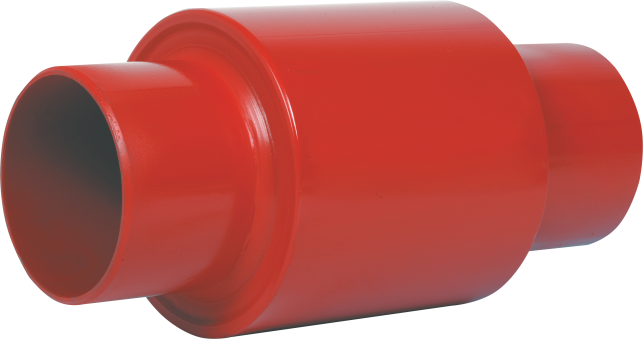
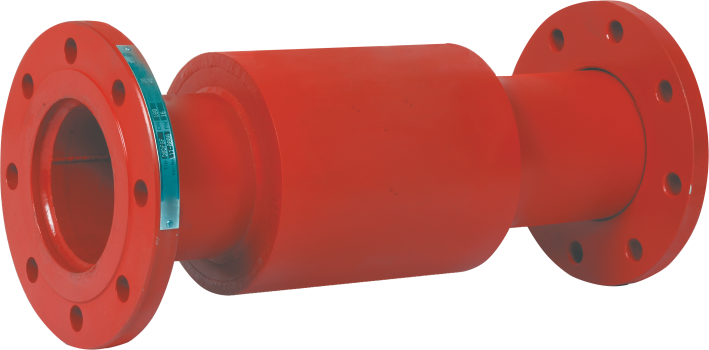
Routes line pressure to the outside of the bellows so it takes large axial movement without squirm — the buckling that limits long convolutions. For long single-anchor runs and steam or hot-water mains where thermal growth exceeds a standard axial joint.
Technical Data
| Bellow Material | Stainless Steel AISI 304 (opt. AISI 316, AISI 321) |
|---|---|
| Pipe Material | Carbon Steel St37.2 (opt. Stainless Steel) |
| Flange Material | Carbon Steel St37.2 (opt. Stainless Steel) |
| Connection Types | Fixed & Loose Flanged, Weld-Neck |
| Connection Sizes | DN25 (1″) to DN1200 (48″) |
| Operating Pressure | PN2.5 / PN6 / PN10 / PN16 / PN25 / PN64 |
| Operating Temperature | -20 °C to +400 °C |
| Expansion Value | 30 mm (-20/+10), 60 mm (-40/+20), 90 mm (-70/+20) |
| Design Standard | EJMA Standards |
Selection Guide
Compact build absorbing -20/+10 mm of axial movement (design pressure 16 bar).
Best forShorter runsMid-range build for -40/+20 mm thermal growth (design pressure 16 bar).
Best forDistrict heating lateralsFull-length build taking -70/+20 mm on long mains (design pressure 16 bar).
Best forLong steam mainsDatasheet & Drawings
Externally pressurized joint specifications and movement values on one page, plus the technical drawing. A certified approval drawing follows with your quotation.
EN 10204 3.1 material certificates are supplied with your shipment.
Frequently Asked Questions
What is an externally pressurized expansion joint used for?
It absorbs large axial movement at a single point in a straight run. By pressurising the bellows externally it avoids the instability that limits ordinary axial joints, making it ideal for long district-heating and hot-water mains.
What is squirm, and how does this design prevent it?
Squirm is the sideways buckling of a long bellows when internal pressure acts on it like a compressive column load. Placing the pressure on the outside of the bellows keeps it stable, so a long, high-movement bellows can be used safely.
How is it different from a standard axial joint?
A standard axial joint is pressurised internally and is limited in how much movement one bellows can provide before squirm becomes a risk. An externally pressurized joint reverses the pressure and adds a housing and internal guide, delivering far greater single-point movement in one compact unit.
Does it still need anchors and guides?
It is internally guided, so external guiding needs are reduced, and it can include an integral anchor base that serves as the main anchor. The layout still needs anchoring, but usually far fewer anchors than a run of ordinary joints.
Which media and industries is it suited to?
It is best suited to clean liquids and gases such as hot water, steam and thermal oil, and is most widely used in district heating, hot-water and steam distribution, and power-plant auxiliary lines.
What size and rating can TOTFLEX supply?
Units are engineered within a DN25–DN3000 envelope, up to 550 °C and PN40, in stainless as standard and alloys for extreme duty, each verified for its specific movement and conditions.
Engineered to order. Delivered worldwide.
Send your duty conditions — size, pressure, temperature, medium and connections — and our engineers return a drawing, material selection and lead time.
Request a quote