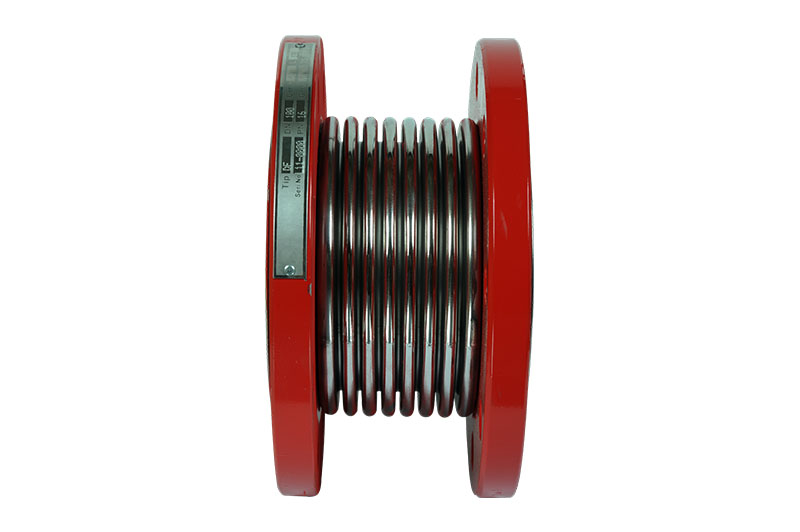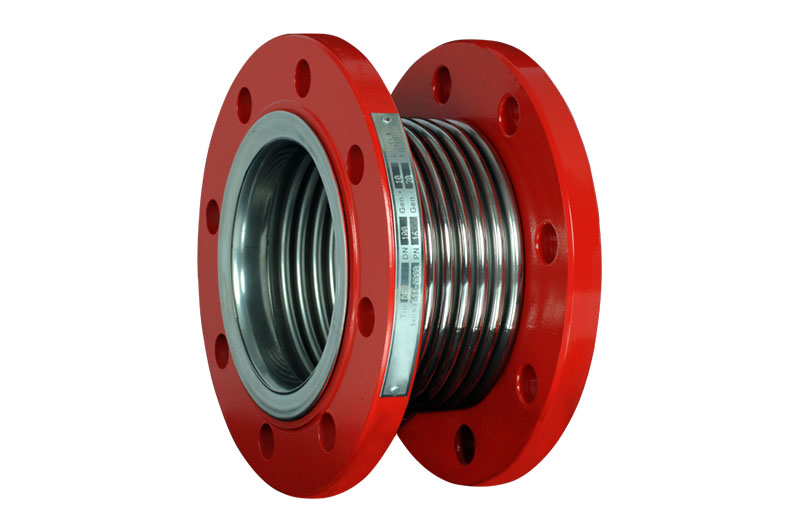
Axial Expansion Joints
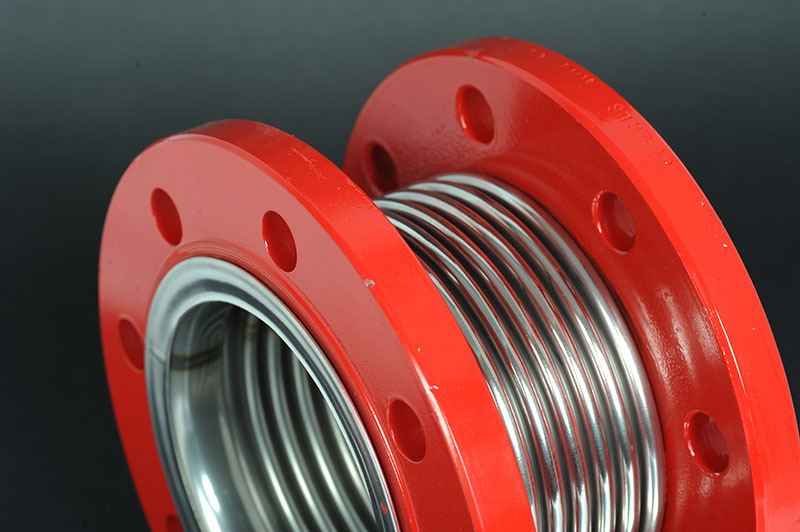
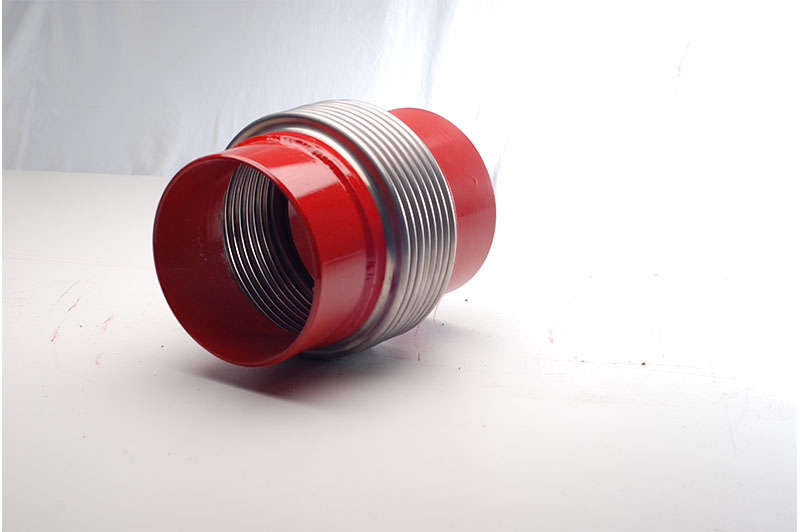
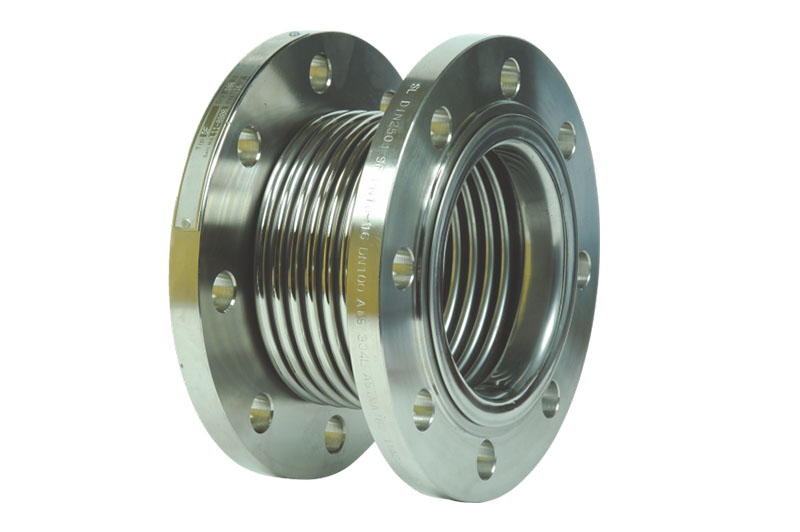
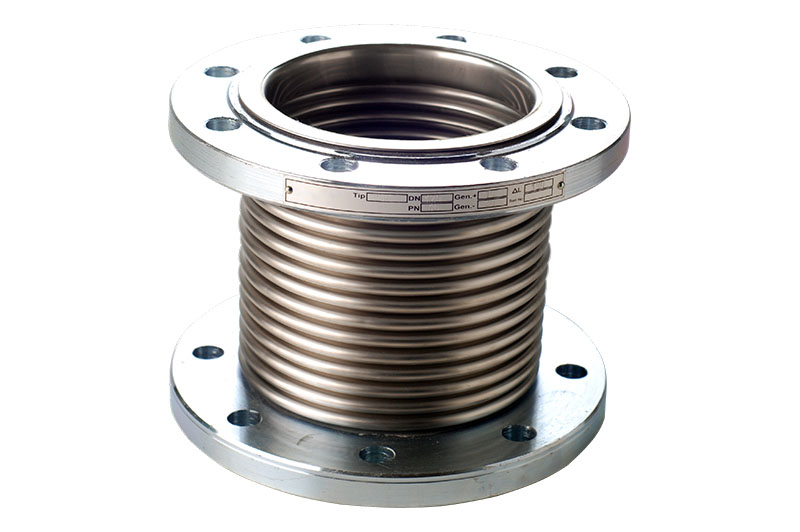
Stainless-steel bellows with an external cover and inner flow liner — absorbs axial movement (extension and compression) along a straight pipe run. Designed and manufactured to EJMA standards.
Technical Data
| Bellow material | Stainless Steel AISI 304 (opt. AISI 316, AISI 321) |
|---|---|
| End material | Carbon Steel St37.2 (opt. AISI 304, AISI 316) |
| Protection | External cover + internal flow liner |
| Connection types | Fixed flanged, loose (rotatable) flanged, weld-neck end |
| Pressure ratings | PN6 / PN10 / PN16 / PN25 / PN40 / PN64 |
| Nominal diameters | DN25 (1") to DN3000 (120") |
| Operating temperature | -20 °C to +400 °C |
| Design basis | EJMA Standards |
Selection Guide
Fixed or loose (rotatable) flanges to EN 1092-1 / ASME B16.5.
Best forBolted pipeworkWeld ends for direct butt-welding into the line.
Best forWelded mainsInternal liner and external shroud for high-velocity or exposed lines.
Best forSteam · high velocityDatasheet & Drawings
Axial joint dimensions, movement values and materials on one page, plus the technical drawing. A certified approval drawing for your exact configuration follows with the quotation.
EN 10204 3.1 material certificates are supplied with your shipment.
Frequently Asked Questions
What movement does an axial expansion joint absorb?
It absorbs axial movement only — compression and extension along the centreline of the pipe. It is designed for thermal growth on straight runs and does not accommodate significant lateral offset or angular rotation.
Does an axial expansion joint need anchors and guides?
Yes. An untied axial joint does not restrain pressure thrust, so the line needs main anchors to carry that thrust and properly spaced pipe guides to keep the run straight and stop the bellows buckling. Correct anchoring and guiding are essential to safe operation.
What is the difference between single-ply and multi-ply bellows?
A single-ply bellows has one convolution wall and is simple and robust; a multi-ply bellows uses several thin plies to give a lower spring rate, longer fatigue life and lower reaction forces for the same movement. Multi-ply is preferred for high cycle counts and larger travel.
When should I choose an axial joint instead of a universal joint?
Choose an axial joint when thermal growth is mainly along a straight, well-anchored run and the anchors can carry the pressure thrust. If the pipe must absorb lateral offset or anchoring is difficult, a tied universal joint is usually the better solution.
Do I need an internal liner?
A liner is recommended for high flow velocities and for erosive or hot media, where it reduces turbulence and pressure drop and protects the convolutions. For low-velocity, clean service it is often unnecessary — TOTFLEX advises based on your flow conditions.
What sizes and materials can TOTFLEX supply?
Axial joints are engineered across a DN25–DN3000 envelope, up to 550 °C and PN40, in stainless steel as standard and high-nickel alloys for extreme duty. Each unit is verified for its specific pressure, temperature and movement.
Engineered to order. Delivered worldwide.
Send your duty conditions — size, pressure, temperature, medium and connections — and our engineers return a drawing, material selection and lead time.
Request a quote